Construction loses an average of 42 men a month in the UK to suicide. Safety speaker Steven Kirby explains why safety culture and mental health can’t be treated as separate conversations.
Every month, on average, 42 men working in construction in the UK don’t make it home. Not from a fall, a crush injury, or a vehicle strike. From suicide.
That number should stop you in your tracks. It stopped me too, the first time I heard it properly explained rather than just quoted in a stat sheet.
I’m Steven Kirby, founder of SKLifeCoachUK. I spent two decades in construction, working my way from labourer to site supervisor, before a near-fatal workplace accident changed the direction of my life. What followed wasn’t just physical recovery. It was a mental health crisis I didn’t have the tools or the language to deal with at the time. Depression, anxiety, and PTSD don’t show up on a risk assessment, but they were as real a danger to me as anything on that site.
Why construction specifically
Construction has some of the highest suicide rates of any UK industry, and it’s not hard to see why once you look past the surface.
It’s a male-dominated environment where asking for help still gets read as weakness by a lot of the workforce. Long hours away from home strain relationships. Insecure, project-based work creates constant financial pressure. And the same culture that (rightly) drills physical safety into every worker often has no equivalent language for emotional safety.
Put simply: we’ve spent decades teaching people to spot a trip hazard, and almost no time teaching them to spot a mate who’s struggling.
Safety culture and mental health are the same conversation
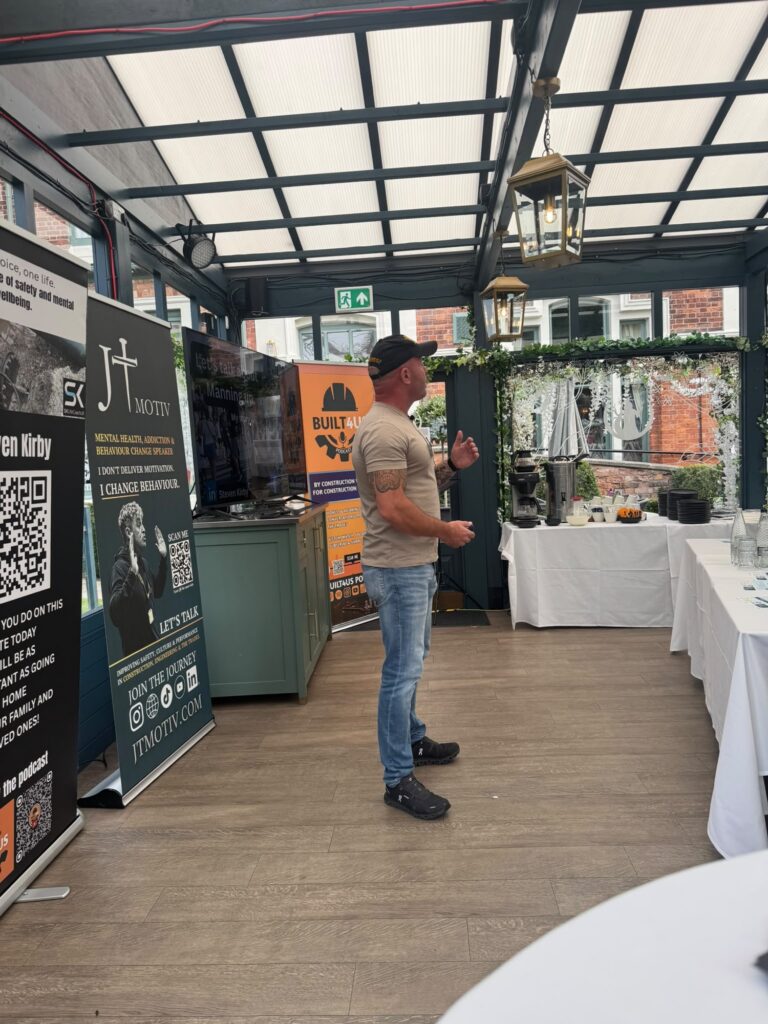
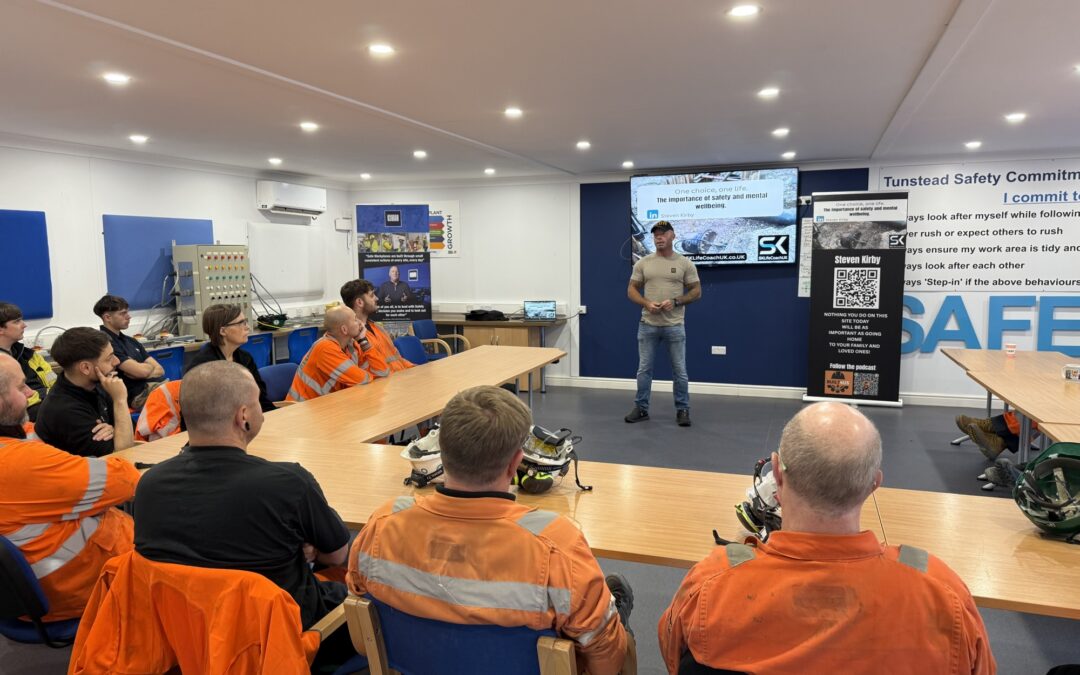
This is the point I make in every talk I deliver, whether it’s a toolbox session on a site or a keynote at a conference.
A genuine safety culture isn’t defined by what’s written on a policy document. It’s defined by what happens when nobody’s watching. Does a junior worker feel safe stopping a job that doesn’t feel right? Does a colleague get challenged, gently, when they say “it’ll be fine”? And critically: does anyone actually ask how someone’s doing, and mean it?
I was on a site where the paperwork said safety mattered. The reality on the ground told a different story. That gap, between what’s written and what’s lived, is exactly where both physical accidents and mental health crises happen.
What I bring to workplaces
I deliver talks and toolbox sessions built around lived experience rather than statistics on a slide. Topics I cover include:
• Building a safety culture people actually believe in, not just comply with
• Recognising the early signs of mental health struggles in high-risk industries
• Giving teams the language and confidence to check in on each other properly
• The link between psychological safety and physical safety on site
These sessions are aimed at H&S leads, HR managers, and site managers who want their teams to leave a talk actually talking about it afterwards, not just ticking a training box.
If this touches close to home
If you, or someone you work with, is struggling right now, please reach out. Samaritans are free to call any time, day or night, on 116 123. CALM (the Campaign Against Living Miserably) can be reached on 0800 58 58 58.
Book a talk for your workplace
If your organisation is serious about closing the gap between safety on paper and safety in practice, I’d like to talk to you. I deliver talks across Yorkshire and the wider UK for construction firms, corporates, and other high-risk industries.
Get in touch to discuss booking a talk or visit sklifecoachuk.co.uk to find out more.